
logo
×

PRODUCTS

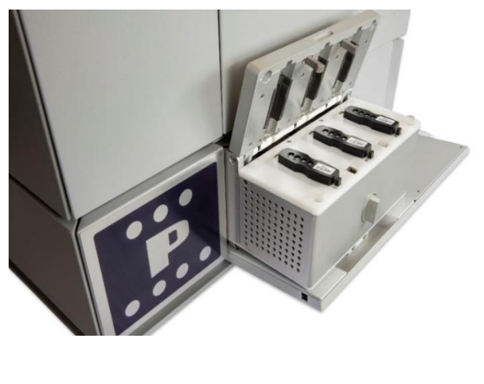
Real-time detection system for protein kinase activity: PamStation
  • You Are Here :HOME > PRODUCTS > Real-time detection system for protein kinase activity: PamStation >
  • Real-time detection system for protein kinase activity: PamStation

    description: With the help of PamGenes kinase activity analysis platform, the activity of kinases in various cells and tissues can be measured in real time. This ability can be applied to research areas including the following areas: from preclinical and discovery res
    Detailed introduction:
    PamGene comprehensive kinase activityanalysis platform can provide new opportunities for a wide range ofapplications, which can provide insight into the molecular mechanisms ofdiseases and lead to the discovery of biomarkers. Many applications of PamGeneare in the field of oncology, and new applications have emerged in otherdisease fields such as neurobiology, cardiovascular biology, and immunology. Weuse our proprietary 3D peptide microarray technology (PamChip® andPamStation®), which provides multiple methods for global kinase activityanalysis. The assay is very sensitive, requiring only a small amount of lysate tomeasure kinase activity in various samples (including cell lines, xenograftsand human tissues). Lysates obtained from thousands of cells are sufficient toobtain the kinetic characteristics of the various kinases present in thesesamples. This is achieved by incubating the sample lysate with 144 tyrosine or144 serine/threonine kinase peptide substrates immobilized on the 3D surface ofthe microarray. The kinase present in the lysate phosphorylates the peptidesubstrate, which can be detected using fluorescently labeled antibodies.
    Laboratory workflow:
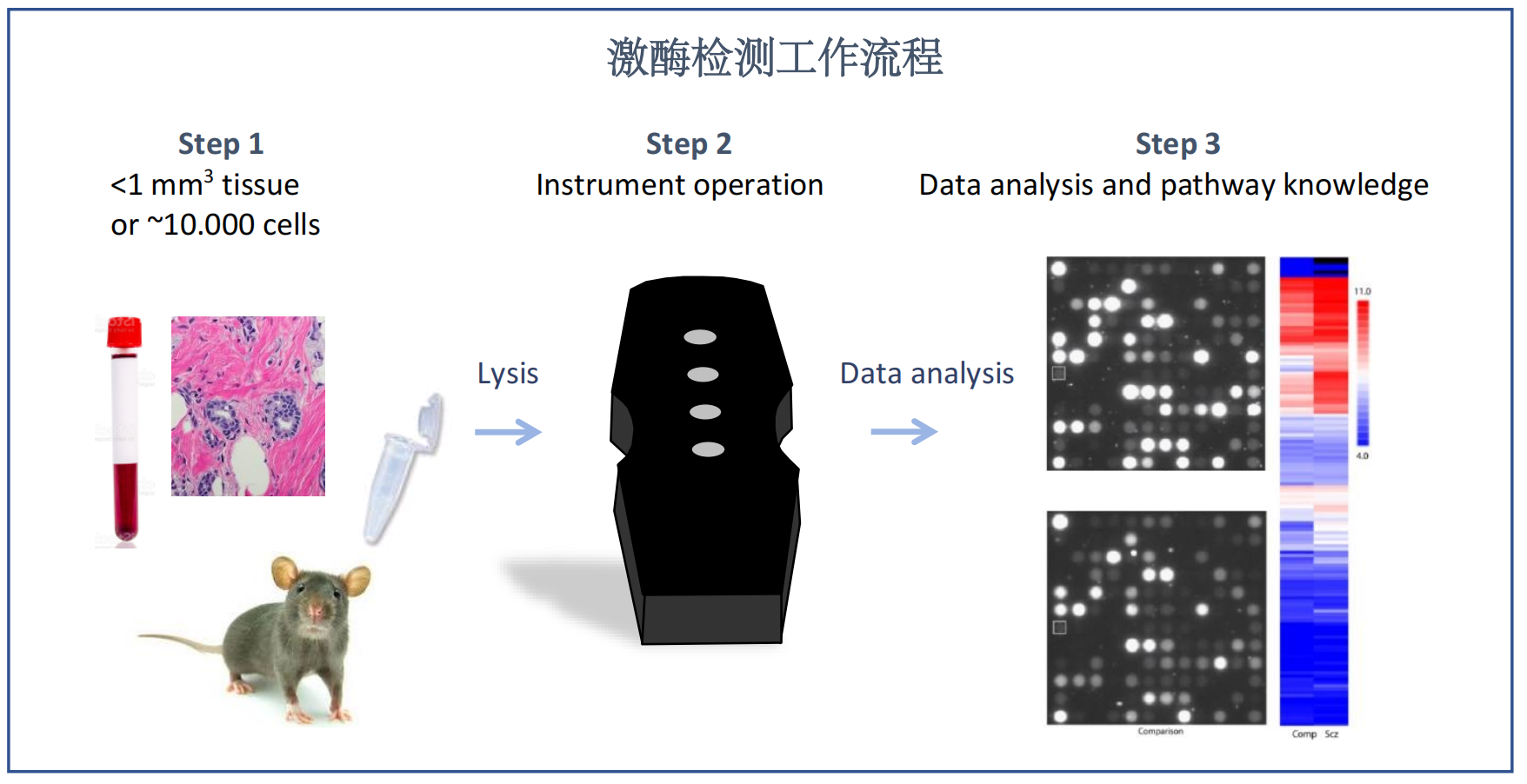
    The kinase assay workflow (Figure 3a-c)includes 3 steps: (1) Sample preparation (cell or tissue lysis); (2) Use ourproprietary Evolve software for PamChip® detection; (3) Use our proprietaryBioNavigator software performs data analysis and knowledge integration. Duringthe measurement, the sample solution is pumped through the porous membrane,enabling faster kinetics and real-time measurement. When the solution is belowthe array, the CCD camera in the workstation will take images of each array atseveral exposure times (Figure 3d). The image was then used by theBioNavigator® software to generate the kinetic data curve for each peptide(Figure 3c). The data workflow performed using BioNavigator® software includesimage quantification, quality control, statistical analysis, visualization andinterpretation.

    feature of product:
    1. Broad coverage-380 phosphates are usedto cover most of the kinase group.
    2. Based on kinase activity-the directinhibitor effect on kinase can be measured.
    3. Sensitive-only a small amount ofprotein input (0.5 to 5μgper array) is required, thus making this assay more sensitive than othermethods.
    4. No specific antibody-The quality of thedata does not depend on the specificity of the phosphate antibody, because thespecificity is derived from 380 phosphate sites.
    5. Full-length kinases-We can measure thekinase activity of full-length proteins from lysates of several cell lines andtissues, but other recombinant-based kinase activity assays cannot provide thisactivity.
    concrete application:
    1. Ways to clarify
    In-depth study of immune signals, cancer,central nervous system, metabolic abnormalities or related pathways ofcardiovascular disease. Clarify the results of mutants, gene knockouts, or invitro treatments. The derivation of drug response or drug resistance changesfinds a large number of a priori pathways without needing to know key playersand without relying on specific antibodies.
    2. Biomarker discovery
    Utilizing our on-chip pharmacologyfunction, we can provide a new method to discover biomarkers that can predicttreatment, disease specificity, prognosis or drug efficacy.
    3. Disease model characterization
    Compare and analyze your disease models(disease or mutants with healthy or wild-type counterparts) to obtaininformation about disease-specific kinase groups or signal transductionpathways.
    4. Target discovery and interaction
    Discover new drug targets that do notrequire new target information to guide treatment selection and drugdevelopment. Find the mechanism of action of small molecule inhibitors ordevelop (alternative) PD markers.
    Detailed Specifications