
logo
×

PRODUCTS

Basic Information

  • You Are Here :HOME > PRODUCTS > Basic Information >
  • Basic Information

    description: This platform is a high-throughput spatial biology imaging system designed for translational research and large-scale cohort studies. It enables simultaneous visualization and quantitative analysis of multiple protein biomarkers across entire tissue secti
    Basic Information
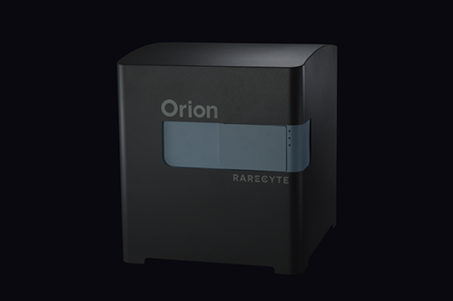
    This platform is a high-throughput spatial biology imaging system designed for translational research and large-scale cohort studies. It enables simultaneous visualization and quantitative analysis of multiple protein biomarkers across entire tissue sections within a single workflow.
    Based on a single-round multiplex immunofluorescence strategy, the system performs parallel detection of multiple targets without iterative staining or cyclic imaging, significantly improving workflow efficiency while preserving sample integrity.
    The platform supports fully automated whole-slide scanning with subcellular spatial resolution, delivering high signal-to-noise ratio and highly reproducible quantitative outputs. Its barcode-driven workflow and automation architecture are optimized for multi-user environments and large cohort studies requiring consistent, high-capacity operation.
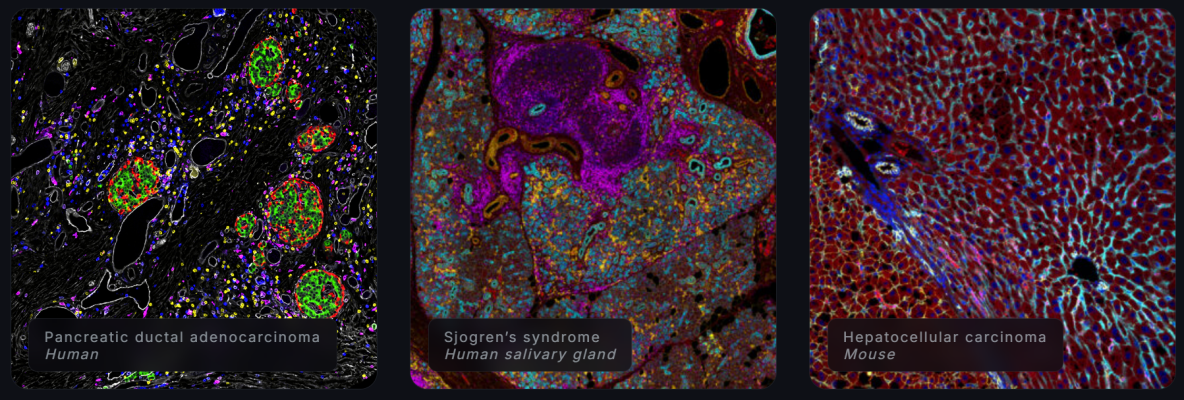
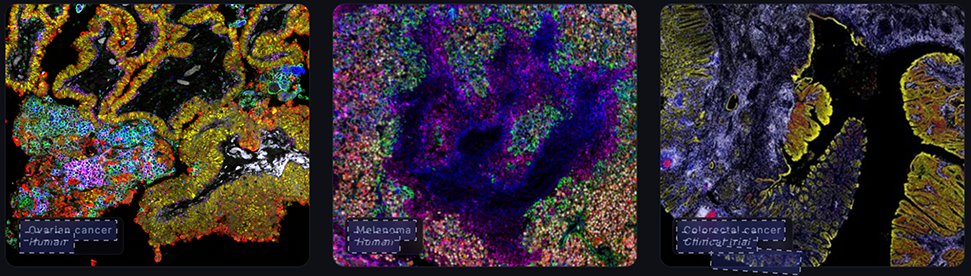
    This system is widely used in tumor microenvironment profiling, immune phenotyping, biomarker discovery and validation, and precision medicine research. It provides high-dimensional spatial information on cellular composition, spatial organization, and functional states within complex biological tissues.
    Product Advantages:
    1. Significantly improved throughput and efficiency
    Single-round multiplex detection combined with automated scanning greatly reduces experimental time and increases data output per unit time.
    2. Reduced sample consumption and workflow complexity
    Eliminates iterative staining and repeated imaging cycles, minimizing sample handling steps and reducing variability.
    3. High-dimensional spatial biological information
    Enables co-localization analysis of multiple biomarkers within native tissue context, supporting spatial proteomics and microenvironment studies.
    4. Scalable for large cohort studies
    Designed with high stability and standardized workflows, suitable for clinical cohort studies and multi-center research collaborations.
    5. Enhanced biomarker discovery capability
    Integration of multiplex spatial information improves identification of potential biomarkers in complex diseases.


    Main Product Features:
    1. High-throughput whole-slide multiplex imaging
    Enables simultaneous imaging of multiple biomarkers across entire tissue sections within a single workflow, supporting large-scale sample processing.
    2. Single-round multiplex fluorescence detection
    Utilizes a single-round multiplex immunofluorescence approach, eliminating the need for iterative staining or repeated imaging cycles.
    3. Fully automated scanning workflow
    Features automated slide handling, scanning, and imaging, enabling unattended continuous operation and improved experimental efficiency.
    4. Subcellular spatial resolution
    Provides subcellular-level spatial resolution across tissue sections, enabling detailed structural and phenotypic analysis.
    5. Standardized and scalable workflow
    Supports barcode-based sample tracking and standardized protocols, making it suitable for large cohort studies and multi-site research collaborations.
    Application Areas:
    1. Tumor microenvironment research
    Enables spatial characterization of immune cells, tumor cells, and stromal components within tissue, supporting comprehensive analysis of tumor microenvironment architecture and interactions.
    2. Immune phenotyping
    Facilitates multiplex co-expression analysis of biomarkers in situ for accurate cell-type identification, immune state assessment, and profiling of immune infiltration patterns.
    3. Biomarker discovery and validation
    Supports spatial biomarker identification, validation, and quantification across large tissue cohorts, enabling translational research and companion diagnostic development.
    4. Precision medicine and patient stratification
    Uses spatial protein expression signatures to define disease subtypes, enabling patient stratification, prognosis evaluation, and therapy response prediction.
    5. Translational research and drug development
    Assists in studying drug mechanisms of action and analyzing clinical trial samples to evaluate treatment-induced changes in tissue microenvironments and therapy-associated biological responses.
    6. Large cohort and multi-center studies
    Designed for high-throughput analysis of clinical samples, enabling standardized workflows for large-scale, multi-site collaborative research with consistent data output.
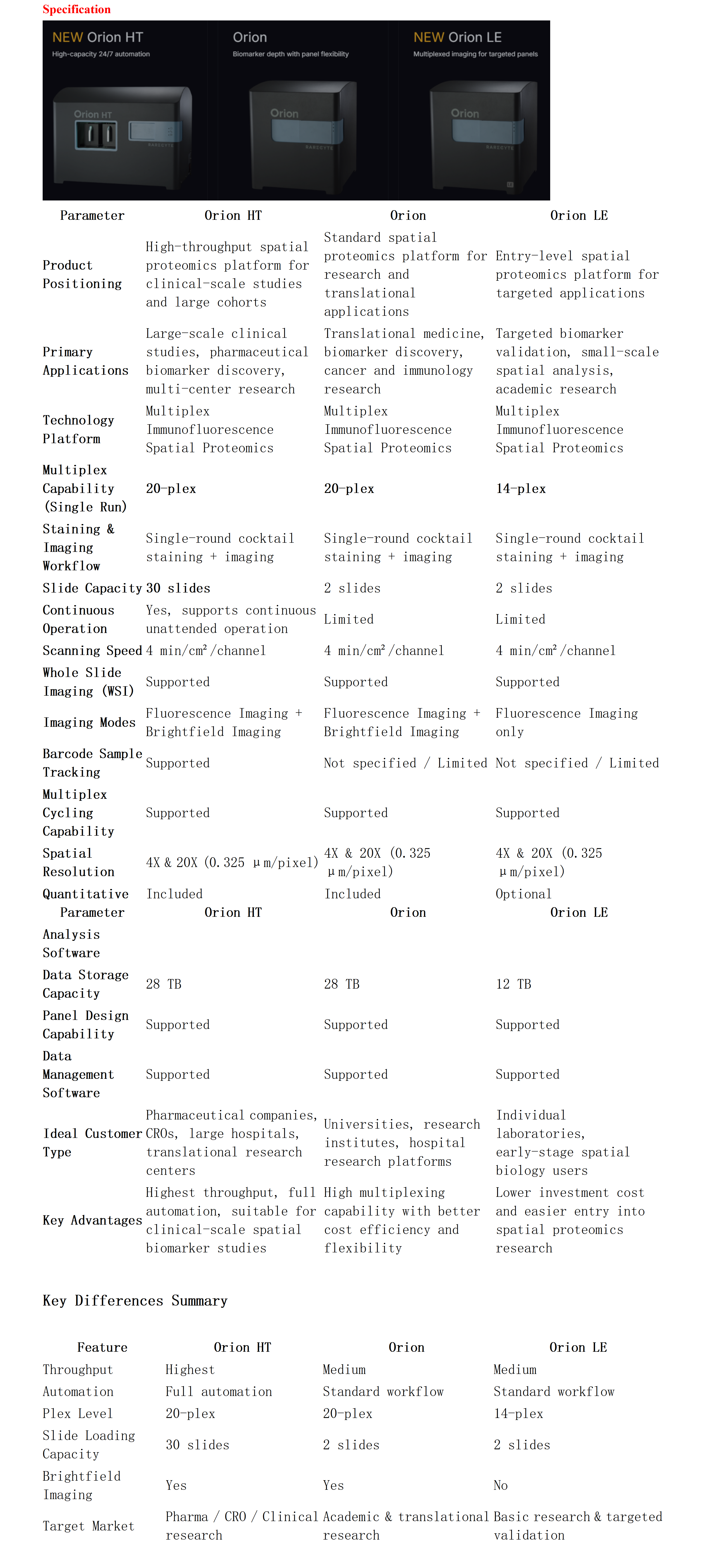
    Specification

    Detailed Specifications