

logo
×

PRODUCTS

Innovative automated tools to screen and sort miniature biological entities, to accelerate research in life science.
  • You Are Here :HOME > PRODUCTS > Innovative automated tools to screen and sort miniature biological entities, to accelerate research in life science. >
  • Innovative automated tools to screen and sort miniature biological entities, to accelerate research in life science.

    description: We are offering a cost-effective robotic device that automatically carries out the visual inspection, the sorting and dispensing of miniature biological entities ranging in size from 0.6 to 1.5 mm. Our patented technology offers a portable and aff
    Overview
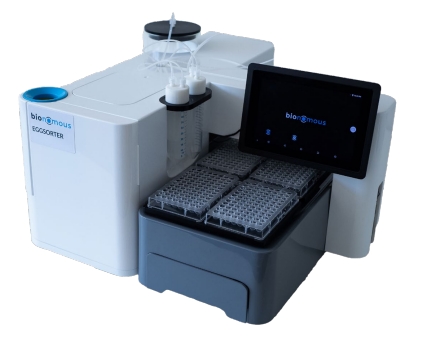
    EggSorter is a cost-effective device that automatically performs visual inspection, sorting, and size allocation of micro-scale biological entities ranging from 0.6 to 1.5 mm. Our patented technology provides a portable and affordable solution for laboratories that handle high-throughput processing of zebrafish embryos or other similar animal models.
    We have specifically developed algorithms to identify different configurations of zebrafish eggs (Danio rerio). These eggs can be classified based on their fertilization stage or the presence of biomarkers. Once processed, all samples can be dispensed into Falcon tubes, Petri dishes, or 96-well plates.
    How It Works
    At the core of the EggSorter device is a rotating wheel that picks up zebrafish eggs one by one and places them in front of an optical lens for inspection. The image of each egg is then captured on an embedded computer, stored in the cloud, and classified using various deep learning-based algorithms. After this process, each embryo can either remain inside the device for continuous monitoring or be dispensed into multiple containers based on its classification.


    Embryo Classification
    Specific algorithms are deployed on the device to detect anomalies as early as one hour after fertilization. Users can also customize the algorithms according to the type of study conducted on the eggs. The algorithm is also capable of classifying eggs based on other criteria, such as embryo age and the presence of biomarkers.

    Continuous Screening
    Interested in observing the full development process from fertilization to larval hatching? Simply insert the eggs into EggSorter to observe and record the continuous development of up to 36 embryos. They will be held in the rotating wheel and photographed at regular intervals, with the development progress displayed on the touchscreen.

    User Interface
    We have developed a user-friendly interface that makes it easy to interact with the device and utilize all its available functions. EggSorter is controlled via a configurable Android application running on the embedded computer, which users interact with via a touchscreen. A larger screen can also be connected to the device to project egg images in high definition.

    Egg Dispensing and Visualization
    The process of dispensing zebrafish eggs into multi-well plates is typically lengthy and tedious. EggSorter automates the placement of selected eggs into 96-well plates.

    Moreover, captured images can be tracked and linked to each corresponding well on the plate.
    Optional Accessories
    Option 1: Biomarker Detection Module
    Specific optical components for biomarker detection can be selected. This option enables the device to detect the presence of common biomarkers used in the zebrafish community, such as Green Fluorescent Protein (GFP) or mCherry.

    Option 2: Multi-Egg Input
    Designed especially for large-scale zebrafish facilities, this option allows parallel processing of multiple batches to accelerate classification. Four input compartments enable embryos from four different batches to be loaded and processed simultaneously within the machine.

    Custom Classification Algorithms
    Beyond the basic fertilized/unfertilized and biomarker detection classification modes, our software engineering team offers additional services for custom classification algorithm development and tuning.
    Are you interested in classifying embryos based on specific morphological features? Or are you looking to analyze the growth of distinct organs or tumors in detail? Then this option is worth considering.
    Detailed Specifications