

Single-cell in situ spatial transcriptome high-resolution imaging analysis system
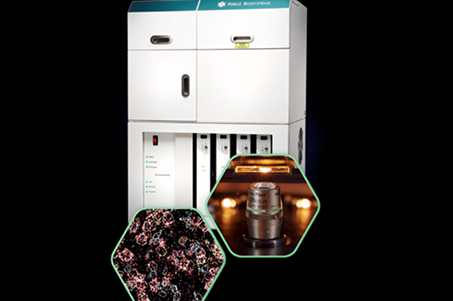
Single-cell in situ spatial transcriptome high-resolution imaging analysis system |
|
| description: | Rebus Esper™ Is a fully integrated, automated instrument that brings together advances in imaging, hydrology, chemistry, and bioinformatics to provide spatial context and subcellular resolution of high-throughput, quantitative, single-molecule, single-cel |
|---|---|
Product summary
Rebus Esper™ Is a fully integrated, automated instrument that brings together advances in imaging, hydrology, chemistry, and bioinformatics to provide spatial context and subcellular resolution of high-throughput, quantitative, single-molecule, single-cell data, and can target up to 30 customized genes at a time
Data from the Rebus system will be interoperable and can be used to compare methods such as cross-RNA sequencing, single-cell RNA-seq, ChIP-seq, ATAC-seq, and proteomics.
Advantage
Designed to provide automated analysis of various biomolecules at subcellular resolution directly within and across large tissue sections. The platform combines a fully automated microfluidic setup with a proprietary synthetic aperture optics (SAO) system at its core for continuously labeled expression transcripts and sensitive, scalable high-resolution imaging. The first applications developed by the platform focus on spatial transcriptomics, where single-molecule fluorescence in situ hybridization (smFISH) chemical detection allows high levels of multiplexing, without the need for barcodes or enzyme amplification, to resolve and map individual RNA molecules at their original locations. It currently allows analysis of up to 30 custom genes
Application
Spatial transcriptomics
Single molecule Fluorescence in situ hybridization (smFISH) chemical detection
RNA sequencing
single cell RNA-SEQ
ChIP-seq
ATAC-seq

 Scan QR Code & Subscribe