
logo
×

PRODUCTS

IONOVATION SCOUT

  • You Are Here :HOME > PRODUCTS > IONOVATION SCOUT >
  • IONOVATION SCOUT

    description: Ionovation company Ionovation scout restructuring of bilayer lipid membrane electrophysiological analysis system, is one of the latest products in this field, it overcomes the traditional patch clamp series of shortcomings, whether from the technical con
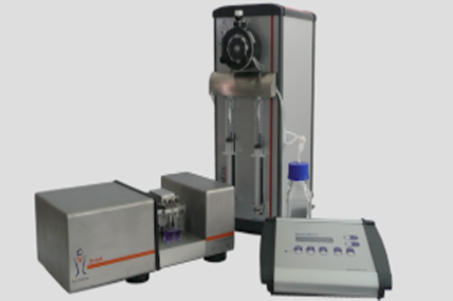
    Ionovation company Ionovation scout restructuring of bilayer lipid membrane electrophysiological analysis system, is one of the latest products in this field, it overcomes the traditional patch clamp series of shortcomings, whether from the technical content of products or from the perspective of the application field of the product, in the electrophysiological analysis technology has always been in a leading position, the developing direction of the electrophysiological analysis technology, is the preferred cell electrophysiological analysis laboratory experimental apparatus at home and abroad. This highly flexible desktop detection system is adapted to a variety of experimental conditions and has been used to study cell membrane ion channels, various animal and plant transporters and their organelles.
    Ionovation scout technical characteristics:
    don't need to create a gigaom block
    the only way to measure the double seal
    can be used to detect ion channels, vesicles and ligands on various cell membranes
    easy to carry out analysis and detection for single ion channel
    The condition can be changed on both sides of the membrane to form a double channel for analysis
    Technology principle:
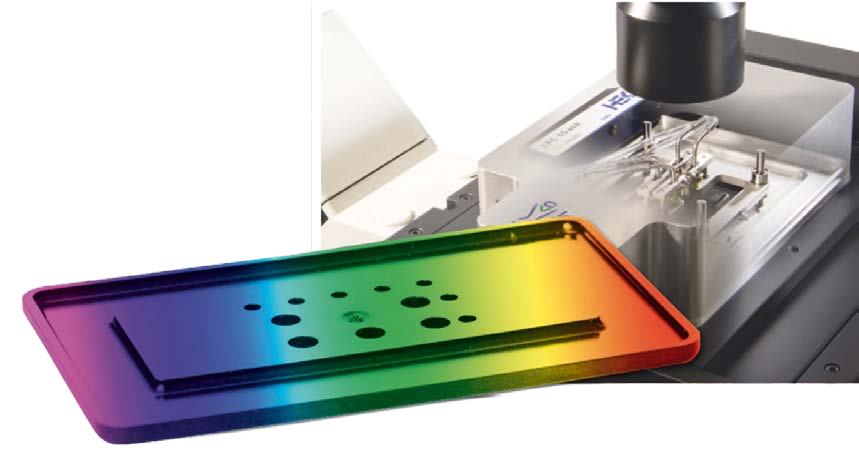
    The Ionovation Scout USES artificial lipid membranes to construct ion channels. The system is measured using two separate electrophysiological measurement Chambers. The double chamber is separated (a) by a polytetrafluoroethylene septum (a) 25 mm thick and 120 micron in diameter. The volume of the two polycarbonate cells was 1.2ml. The polycarbonate chamber has holes at the top for easy access to Ag/AgCl electrodes and injection buffer (a). When the two Chambers are filled with the appropriate buffer, the lipids dissolved in the n-decane are dispersed into the pore (b) of the teflon diaphragm, which is 120 microns in diameter. The level of the buffer is continuously lowered and elevated until the excess lipids on the teflon diaphragm are removed, and an artificial biolipid membrane (C) is formed on the teflon diaphragm with a double layer of lipid self-tissue.
    It is then manipulated according to specific target proteins or organelles. For example, a toxin similar to the hemolysin can be added directly to the polycarbonate chamber for testing. The recombinant ion channel needs to be combined with fatty acids to form recombinant lipoproteins, and these lipoproteins are then "cut" from the biofilm to fuse with the artificial lipid membrane by ion gradient or fusion peptide method.
    After the sample was prepared, the electrophysiology test was carried out. By applying different voltages to monitor the current in the cell's single ion channel, where the signal with a bandwidth of 5-10 kHz is stored on the system's hard drive, the test usually takes the form of voltage clamp mode, in which different voltages are applied to get the target signal.

    Application:
    1.Lipid triggers
    2.Cell membrane transport
    3.Membrane active agents such as synaptic nucleoprotein
    4.Drug safety analysis
    5.Signal transduction mode analysis
    Application case
    Ionovation Scout test system can be used for analysis of multiple ion channels:
    1. Measuring objects: accurate measurement of thousands of ion channels, transporters and pore activities can be achieved.
    2. Software: electrophysiological data collection and analysis software Patchmaster, which USES user-friendly software to realize all measurement control; User defined experimental workflow with pre-defined protocols;
    3. Automatic operation: full-automatic equipment operation (double-layer production and verification, double-layer integrity of capacitance control, film two-side perfusion system); Two layer visualization operation;
    4. Current measurement: stable low noise Ag/AgCl electrode, using salt bridge to record the current range from pA to several nA
    5. Consumables: one-time bimolecular chamber can be simply and quickly replaced;
    Detailed Specifications