

In vitro dynamic blood-brain barrier culture system
In vitro dynamic blood-brain barrier culture system |
|
| description: | Flocel Incs dynamic blood-brain barrier culture system has more than 20 years of world-class technology and expertise in flow-based 3D cell culture, transendothelial resistance (TEER) measurement and fluid perfusion |
|---|---|
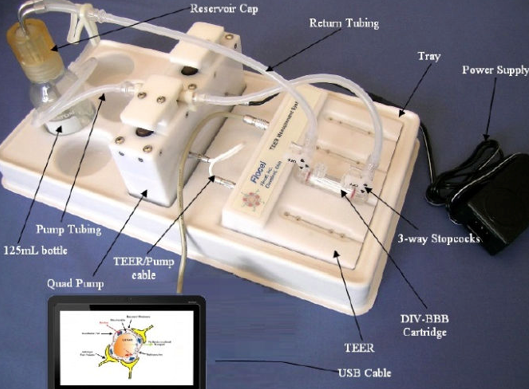
Flocel Incs dynamic blood-brain barrier culture system has more than 20 years of world-class technology and expertise in flow-based 3D cell culture, transendothelial resistance (TEER) measurement and fluid perfusion. Our technology surpasses and is compatible with Endohm cell incubators and other Transwell products and can also cultivate other types of physiological barriers in vitro.
Detailed introduction:
Researchers have tested it using static BBB models or animal models. Compared with these methods, the advantages of Flocels DIV-BBB dynamic model:
●More accurate pharmacokinetic and toxicological research
●More accurately reflect the characteristics of the blood-brain barrier in the body
●Simulate endothelial cell-astrocytic interaction
●Electrical measurement of the integrity of the blood-brain barrier
●Can use real human-derived cells
●Form a tighter connection than the existing static model
●Can significantly reduce the cost of drug development
●Trans-endothelial resistance can reach more than 1000 ohm-cm
concrete application:
Through completeness and transparency, we want to convey the advantages of our DIV-BBB 3.0 system compared to other methods (such as Transwell instruments). Exposure to intraluminal blood flow is essential to promote endothelial cell differentiation and increase the tightness of the blood-brain barrier. Compared with the Transwell device, endothelial cells grown under dynamic conditions develop in a single layer, thereby mimicking the structural physiology of capillaries in the body.
Comparative studies have shown that the development of cell barriers cultured in a static flow environment (Transwell) and a dynamic flow environment (dv-bbb) is quite different. The transendothelial resistance (TEER) value of DIV-BBB culture (B) was 10 times higher than that of Transwell culture (A). In addition, the values detected in the dv-bbb culture are closer to those observed in vivo, because the dynamic flow exerts shear stress on the top surface of the cells, which affects the development and function of the cells.
DiV-bbb reproduces the drug permeability of the brain in the body. Note that the movement of phenytoin sodium on DIV-BBB and rat brain BBB is almost the same.
The cell barrier cultured under dynamic flow conditions, such as the cell barrier cultured in dip-bbb, is stronger than the cell barrier cultured under static flow conditions, physiologically more accurate, and tighter regulation of selective permeability. The permeability of Transwell (D) to the epilepsy drug phenytoin is significantly higher than that of divi-bbb (C), and is 4 times higher than the permeability of 0.0001 cm/s in the body. A stronger and more physiologically accurate cell barrier cultured under dynamic liquid conditions can more accurately test the permeability and pharmacokinetics of drugs.

 Scan QR Code & Subscribe